Bringing a baby home is an exciting experience filled with precious moments, new routines, and plenty of learning. During the earliest months, your baby may remain safely in a crib, bassinet, or caregiver’s arms. However, babies grow quickly. Before long, they begin rolling, crawling, pulling themselves up, and exploring anything they can reach. Baby-proofing your home before these milestones arrive can help create a safer environment and give you greater peace of mind.
Every home and child is different, so baby-proofing should be an ongoing process instead of a one-time project. As your baby becomes more mobile, you will likely discover new hazards that were not noticeable before. These tips can help you identify common risks and prepare each area of your home for your little explorer.
One of the best ways to identify potential hazards is to get down on your hands and knees and look at each room from your baby’s level. Objects that seem harmless from an adult’s perspective may be fascinating and accessible to a crawling child.
What to Look For: Examine electrical cords, outlets, small objects, sharp corners, unstable furniture, low shelves, plants, and anything else within reach.
Overlooked Areas: Check beneath furniture and behind curtains. Remove coins, batteries, buttons, toy pieces, and other small objects that present choking risks.
Regular Re-Inspections: Repeat this check regularly as your child learns to crawl, stand, climb, and open doors.
Dressers, bookshelves, cabinets, and televisions can become dangerous if a child pulls or climbs on them.
Wall Anchors: Anchor heavy furniture securely to wall studs using brackets or anti-tip straps. Even sturdy pieces can tip when drawers are opened or weight is applied to the front.
Television Safety: Secure televisions with safety straps on stable surfaces or mount them securely to the wall. Avoid placing toys or remote controls on top of furniture, as children may attempt to climb up to reach them.
Weight Distribution: Keep heavier objects on lower shelves, avoid leaving multiple drawers open simultaneously, and install drawer stops or child-resistant locks.
Electrical outlets are located at the perfect height for crawling babies.
Outlet Protection: Install secure outlet covers or sliding safety plates on every unused outlet. Choose covers that are difficult to remove and too large to pose choking risks.
Cable Management: Hide power strips or place them inside child-resistant covers. Keep chargers, extension cords, lamp cords, and appliance cables secured and out of reach.
Window Blinds: Use cordless window coverings whenever possible. If you have corded blinds, install approved safety devices to keep cords secured high and out of reach.
The kitchen contains hot surfaces, sharp utensils, cleaning products, breakable dishes, and heavy appliances.
Cabinets and Drawers: Install safety latches on lower cabinets and drawers, especially those containing knives, chemicals, glassware, or small appliances.
Hazardous Storage: Store cleaning products, dishwasher detergent, medicines, alcohol, plastic bags, and other hazardous materials in high, locked cabinets.
Stove Safety: Use back burners whenever possible, turn pot handles toward the rear of the stove, and consider stove-knob covers and an oven lock. Keep hot drinks and appliance cords away from counter edges.
High Chairs: Always use safety straps (including the crotch strap) when placing a baby in a high chair, and position the chair away from walls or counters they could push against. Never leave a baby unattended.
Water can become dangerous very quickly; babies and young children should never be left alone in a bathtub or bathroom, even briefly.
Bath Time Preparation: Gather all supplies—towels, soap, and clothing—before starting bath time so everything is within reach.
Safety Locks: Install a toilet lock and keep the lid closed. Store medicines, vitamins, cosmetics, razors, and electrical grooming tools inside locked cabinets.
Water & Floor Safety: Use nonslip mats in the tub and on the floor. Check water temperatures before bathing, adjust your water heater to a safer maximum temperature, and consider anti-scald devices.
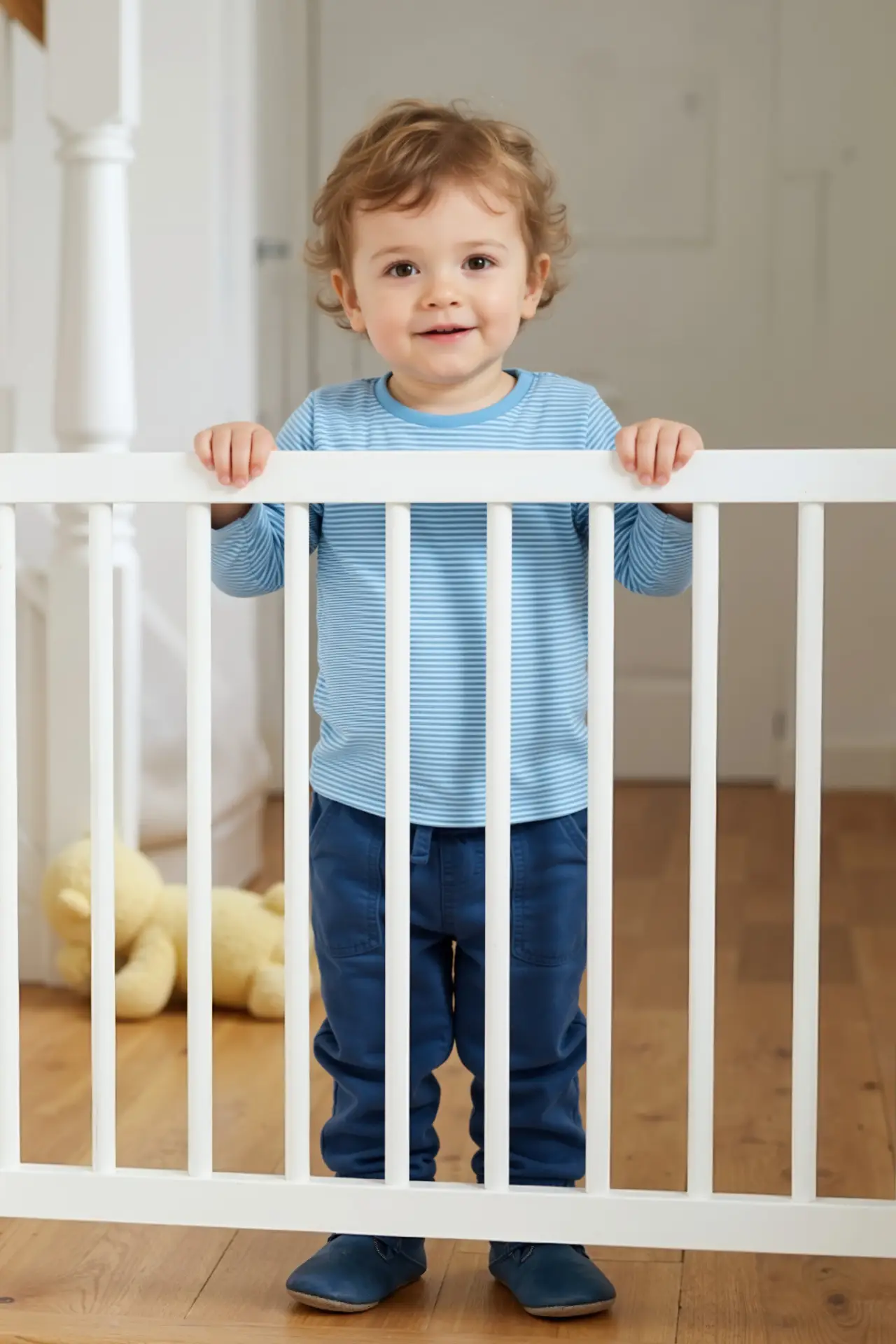
Stair Gates: Install safety gates at the top and bottom of every staircase. Hardware-mounted gates are safer for the top of stairs. Avoid older accordion-style gates that could trap a child’s head or neck, and never climb over gates while holding a baby.
Door Protection: Use child-resistant door covers or latches to block access to unsafe rooms, and add pinch guards to protect fingers from closing doors.
Window Safety: Install window guards or stops that prevent windows from opening more than a few inches. Remember that window screens do not prevent falls. Move cribs, beds, and climbable furniture away from windows.
Simple Crib Setup: Use a firm, flat mattress with a tightly fitted sheet in a safety-approved crib or bassinet.
Keep It Clear: Keep pillows, loose blankets, stuffed animals, sleep positioners, and padded bumpers out of the crib.
Crib Placement: Place cribs away from windows, curtains, cords, heaters, lamps, and wall decorations. Check that all hardware is secure and that the mattress fits tightly without gaps. Follow current safe-sleep guidance from your pediatrician.
Furniture Edges: Cover sharp corners on coffee tables, fireplace hearths, and entertainment stands with cushioned guards. Secure lamps and remove unstable floor decor.
Hazardous Small Items: Keep candles, matches, lighters, button batteries, magnets, and remote controls out of reach. Button batteries and magnets can cause severe injuries if swallowed.
Toys & Storage: Inspect toys regularly for loose or small parts. Use a toy box without a heavy lid or choose one with a safe, slow-closing support.
Alarms & Extinguishers: Install working smoke and carbon monoxide alarms on every level of your home, testing them regularly. Keep a fire extinguisher accessible near the kitchen.
Emergency Contacts: Save important numbers (pediatrician, Poison Control) in your phone and display them prominently for caregivers.
First Aid & CPR: Learn infant and child CPR through a qualified provider, and keep a well-stocked first-aid kit accessible to adults.
Caregiver Instructions: Ensure babysitters and relatives understand your household safety measures, emergency contacts, and routines.
Baby-proofing cannot prevent every bump or tumble, but it drastically reduces common household risks. Walk through your home regularly, repair broken safety equipment, and adjust precautions as your child develops new skills.
Remember that protective products work best when combined with attentive adult supervision. Thoughtful baby-proofing gives your growing child the freedom to learn, play, and explore safely.